GEOTECHNICAL ENGINEERING
PORTLAOISE
HomeSlopes & WallsActive/passive anchor design

Active and Passive Anchor Design in Portlaoise: Geotechnical Restraint for Deep Excavations

Practical geotechnics, field-tested.

LEARN MORE

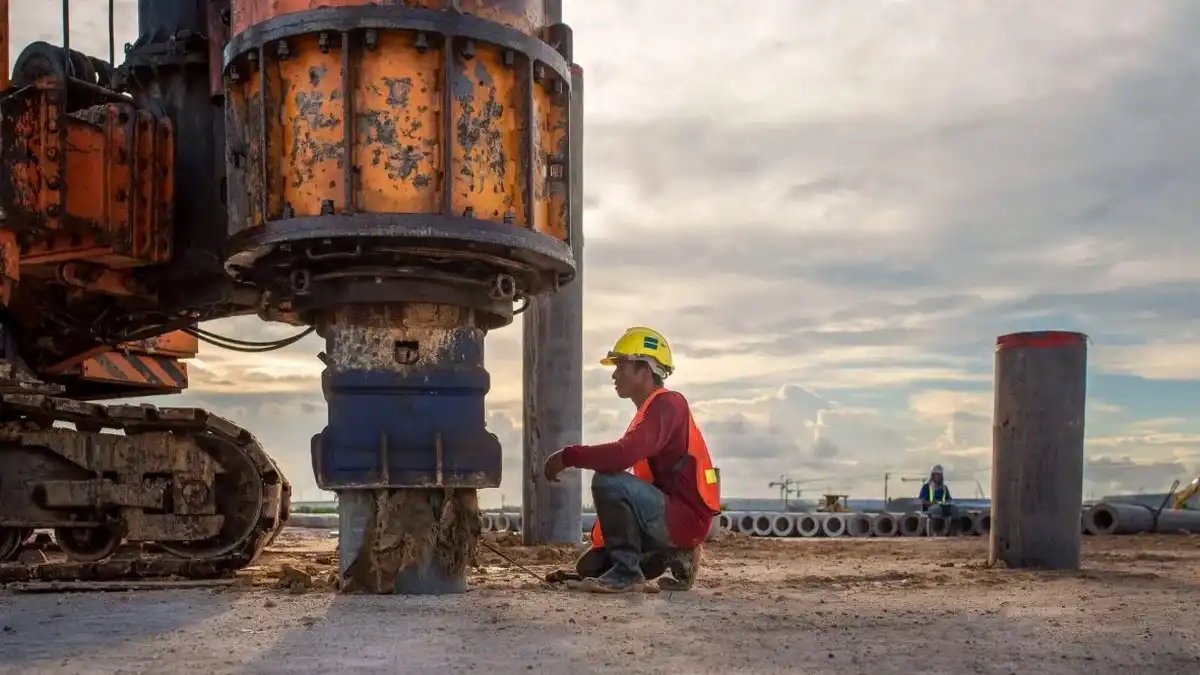
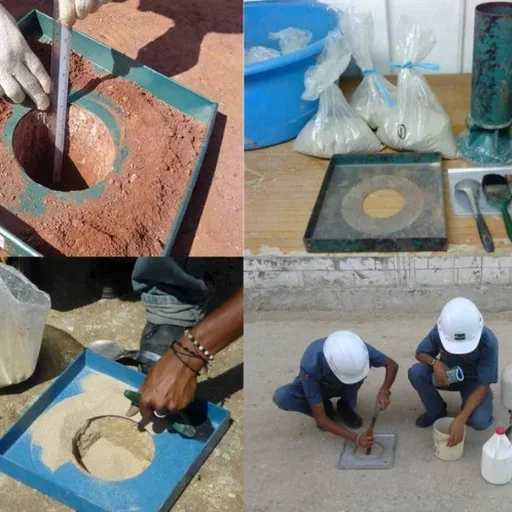
Portlaoise sits on a varied glacial geology, with compact lodgement tills overlying the Waulsortian limestone that defines much of the Laois basin. The water table here often rises within 2 to 3 metres of the surface during the wet months, which directly impacts the bond stress achievable in a grouted anchor. We design both active and passive restraint systems to manage lateral earth pressures in these mixed ground conditions. Temporary excavation support for the ongoing Portlaoise town centre redevelopment frequently demands a combination of pre-stressed active anchors and passive dowels to limit movement in adjacent structures. Our approach integrates site-specific friction angles from direct shear tests with the design methodology in IS EN 1997-1:2004, ensuring that each anchor tendon is sized for the long-term drained parameters of the local boulder clay.

In Portlaoise's compact till, a correctly tensioned active anchor transfers load beyond the active wedge, keeping urban excavations stable without oversized propping.
Our service areas

How we work

A recent commercial cut-and-cover excavation off the Mountmellick Road exposed a metre of made ground over dense, fissured till. The engineer needed to restrain a sheet pile wall while protecting an existing masonry building just six metres away. We specified passive rock dowels socketed into the limestone bedrock at 3.5-metre centres, combined with a single row of 20-tonne active anchors stressed to 80% of the test load. This hybrid configuration kept horizontal displacement under 12 mm, well within the serviceability limit. The design of retaining walls becomes significantly more economical when the anchor bond length is optimised to the in-situ strength of the till rather than a generic assumed value. Our load tests on sacrificial anchors in Portlaoise typically confirm that ultimate bond stress in the stiff glacial clay exceeds 250 kPa once the grout has cured for seven days.
Active and Passive Anchor Design in Portlaoise: Geotechnical Restraint for Deep Excavations
Technical reference — Portlaoise

Local ground factors

What we observe in Portlaoise is that contractors sometimes treat a passive anchor as a simple soil nail, overlooking the creep potential in the saturated till during winter. A passive bar grouted into stiff clay can lose up to 15% of its pull-out resistance if the groundwater regime changes after a prolonged wet spell. Skipping the suitability test on a sacrificial anchor is another risk: the corrosivity of the local limestone-derived water, with pH often below 6.5, can accelerate corrosion in unprotected steel. We have also encountered karstic voids in the Waulsortian limestone at depth, which can cause sudden grout loss during installation. A design that omits a pre-investigation borehole risks underestimating the bond length needed to bypass these solution features.

Need a geotechnical assessment?

Reply within 24h.

Email: contact@geotechnical-engineering.co

Regulatory framework

IS EN 1997-1:2004 (Eurocode 7: Geotechnical design — General rules), IS EN 1537:2013 (Execution of special geotechnical work — Ground anchors), Irish National Annex to IS EN 1997-1, Institution of Structural Engineers (IStructE) guidance on temporary works

Technical data

ParameterTypical value
Anchor typeActive (pre-stressed) and passive (no initial load)
Design standardIS EN 1997-1:2004 + Irish National Annex
Typical bond stress in till200–300 kPa (stiff to very stiff consistency)
Tendon steel gradeY1860S7 low-relaxation strand (EN 10138)
Corrosion protectionDouble barrier (Class II) for permanent anchors
Test load125% of service load (acceptance test to DIN 4125/EN 1537)

Common questions

What is the difference between an active and a passive anchor?

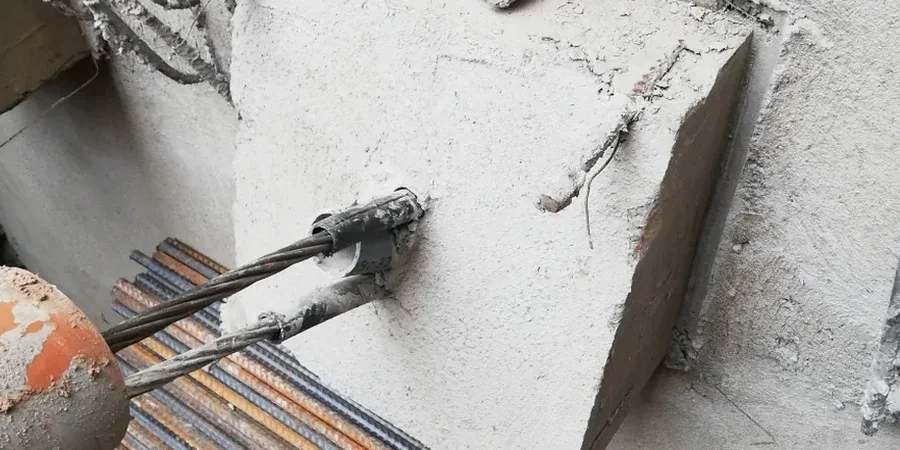
An active anchor is pre-stressed with a hydraulic jack immediately after installation, locking in a design load that actively compresses the retained ground and reduces wall movement. A passive anchor, by contrast, only develops resistance once the wall starts to move and loads the tendon. Active anchors are used where movement must be tightly controlled, such as next to existing buildings in Portlaoise town centre.

How deep do anchors need to be in Portlaoise's glacial till?

The anchor bond zone typically starts behind the theoretical active wedge, which for a vertical cut in stiff till extends roughly 30-40% of the retained height back from the face. Total anchor length often ranges from 12 to 22 metres, depending on the excavation depth and the required bond length to develop the design load in the dense lodgement till.

What does active/passive anchor design cost for a project in Portlaoise?

For a typical Portlaoise project, the design package including feasibility assessment, detailed calculations to Eurocode 7, and site supervision of testing falls between €960 and €3,830. The exact cost depends on the number of anchor rows, the complexity of the ground model, and whether long-term monitoring is included.

Can anchors be installed in the limestone bedrock under Portlaoise?

Yes, and it is often the best solution when the till cover is thin. We design rock anchors socketed into the Waulsortian limestone, paying particular attention to karstic features and potential grout loss. A rotary-percussive drilling method with water flush is typically used to penetrate the limestone efficiently.

What corrosion protection do permanent anchors require in Irish ground conditions?

Permanent anchors in Portlaoise must have double barrier (Class II) corrosion protection as a minimum under IS EN 1537. This means a corrugated plastic sheath over the tendon and an outer grout cover, because the local groundwater in the limestone can be mildly acidic and aggressive to unprotected steel.

Location and service area

We serve projects in Portlaoise and surrounding areas.

View larger map