GEOTECHNICAL ENGINEERING
PORTLAOISE
HomeFoundationsShallow foundation design

Shallow Foundation Design in Portlaoise: Ground Conditions That Define the Approach

Practical geotechnics, field-tested.

LEARN MORE

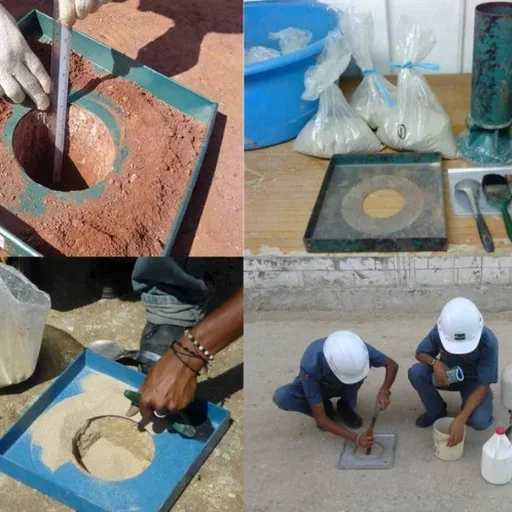
Portlaoise sits on a complex glacial landscape where the Triogue River has carved shallow valleys into Carboniferous limestone. Designing a shallow foundation here means confronting highly variable overburden: dense lodgement till on the higher ground near the town centre, and softer alluvial silts along the river corridor. Under I.S. EN 1997-1:2005, every foundation design must start with a ground investigation that maps the bearing stratum, whether it is the stiff boulder clay at Knockmay or the weathered rock at Ridge Road. The team running the analysis combines decades of in-situ testing with laboratory classification to produce serviceability limit state checks that reflect the real stiffness of the ground. For sites where the glacial material thins to less than a metre, the plate load test provides direct settlement data before finalising the footing dimensions, while the grain size analysis confirms drainage characteristics that influence frost heave risk in unheated buildings.

In Portlaoise, the difference between a footing that settles 10 mm and one that settles 40 mm is often a single metre of lateral position on the limestone-till contact.

Our service areas

How we work

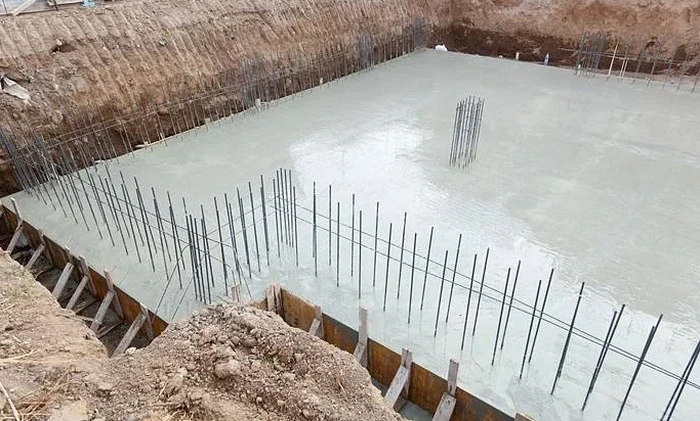
Ground behaviour changes sharply between the commercial core and the residential estates spreading toward the M7. In the town centre, the lodgement till is dense and overconsolidated—strip footings at 0.9 m depth routinely achieve allowable bearing pressures above 200 kPa. Move east toward Kilminchy, and the soil profile shifts to looser glaciofluvial sands interbedded with silt lenses; here, a CPT test becomes essential to define the stratigraphy without disturbing the sample fabric. The county council planning department increasingly requires settlement calculations that distinguish immediate from consolidation settlement, especially on brownfield plots where historical fill masks the natural strata. The design philosophy follows Eurocode 7 Design Approach 1, applying partial factors to both actions and material properties. A shallow foundation in Portlaoise works best when the designer respects the interface between till and bedrock: the limestone surface is often pinnacled, and a few metres of lateral offset can change the bearing condition from rock to stiff clay, which is why geophysical profiling with seismic refraction is sometimes run before excavating.
Shallow Foundation Design in Portlaoise: Ground Conditions That Define the Approach
Technical reference — Portlaoise

Local ground factors

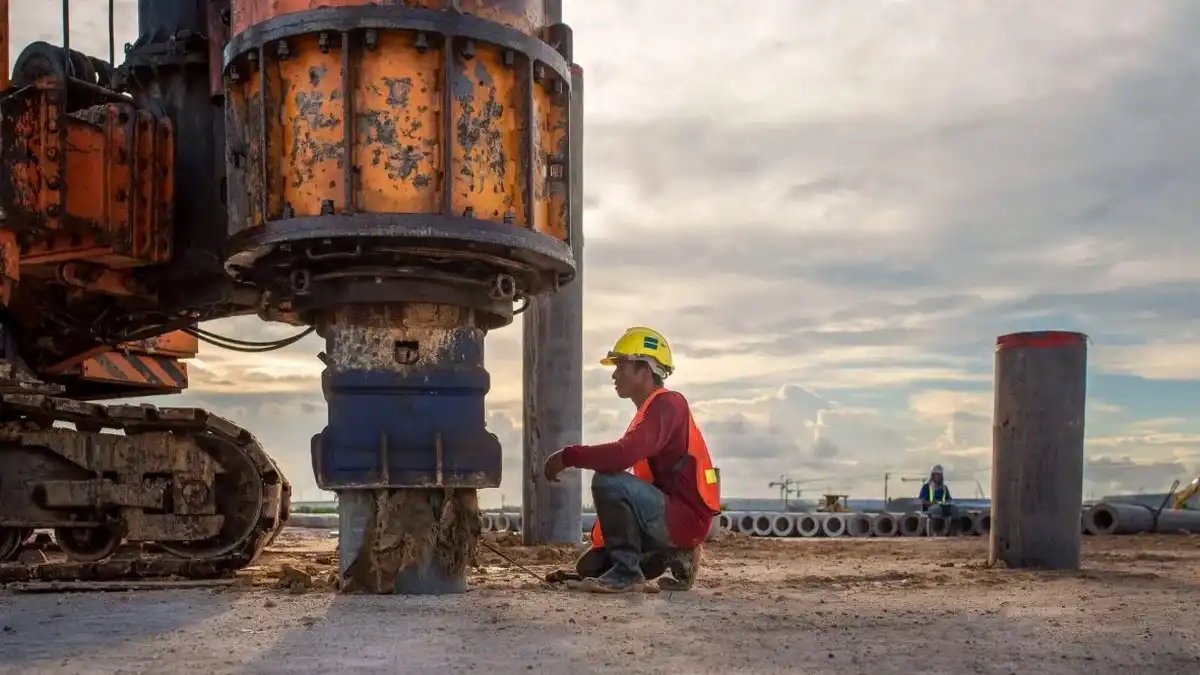
The site investigation rig working in Portlaoise is a tracked dynamic penetrometer fitted with an automatic trip hammer, capable of boring through the cobble-rich till that would stall a lightweight shell-and-auger setup. The biggest risk to a shallow foundation in this town is differential settlement caused by an undetected buried channel—the Triogue River has shifted course over centuries, leaving soft organic pockets sealed beneath firmer desiccated crust. If the investigation misses one of these pockets, a strip footing designed for 200 kPa can tilt within the first wet season. The laboratory runs oedometer tests on undisturbed Shelby tube samples to measure the compression index of the alluvium; the numbers often exceed 0.25, which translates to more than 30 mm of consolidation settlement under a two-storey masonry load. Mitigation usually involves deepening the footings to reach the till or switching to a rigid raft foundation that bridges the soft spot while keeping the excavation shallow.

Need a geotechnical assessment?

Reply within 24h.

Email: contact@geotechnical-engineering.co

Regulatory framework

I.S. EN 1997-1:2005 Geotechnical design – General rules, I.S. EN 1997-2:2007 Ground investigation and testing, I.S. EN 1992-1-1:2004 Design of concrete structures (with Irish National Annex), Building Regulations 2014 (Technical Guidance Document A – Structure)

Technical data

ParameterTypical value
Bearing stratum (town centre)Lodgement till, N60 typically 25–40 blows/300 mm
Bearing stratum (floodplain)Alluvial silty clay, N60 < 8 blows/300 mm
Design codeI.S. EN 1997-1:2005, Irish National Annex
Typical footing depth0.9–1.2 m below ground level
Allowable bearing pressure (till)200–300 kPa (serviceability limit state)
Settlement threshold (residential)25 mm total, 15 mm differential per I.S. EN 1997
Groundwater considerationShallow water table in Triogue floodplain, typically 1.5–2.5 m bgl
Rockhead depth (town)1.5–6.0 m bgl, pinnacled limestone surface

Common questions

What ground investigation is needed before designing a shallow foundation in Portlaoise?

A site-specific investigation to I.S. EN 1997-2 is the baseline. In Portlaoise this typically includes cable percussion boreholes or dynamic sampler probes to at least 6 m depth, plus trial pits to inspect the till-bedrock contact. Laboratory classification—Atterberg limits, particle size distribution, and oedometer tests on fine-grained samples—completes the geotechnical model before any foundation dimensions are calculated.

How much does a shallow foundation design package cost for a typical Portlaoise site?

For a standard residential or light commercial plot in Portlaoise, the combined ground investigation and foundation design report generally falls between €1.640 and €3.020, depending on the number of exploratory points, laboratory testing scope, and whether a raft or footing solution is required.

Can you design shallow foundations on the peaty soils found near the Triogue River?

Peat and soft organic silts along the Triogue floodplain rarely provide adequate bearing capacity for conventional shallow foundations without ground improvement. The standard approach is either to excavate the compressible layer and replace it with engineered granular fill compacted in lifts, or to bypass it with a rigid raft designed to span across the soft zone, verified by consolidation analysis.

How long does the design process take once the site investigation is complete?

Once the laboratory results and field logs are finalised, the geotechnical design report for a shallow foundation in Portlaoise is typically delivered within seven to ten working days. The timeline extends if third-party structural coordination or planning authority consultations are required.

What is the typical factor of safety applied to shallow foundations under Irish practice?

Eurocode 7 does not use a single global factor of safety. Instead, partial factors are applied to actions, material properties, and resistances per the Irish National Annex. For a spread footing on lodgement till in Portlaoise, the design typically satisfies GEO limit state with an over-design factor between 1.4 and 1.6 when checked against the unfactored ultimate bearing capacity.

Location and service area

We serve projects in Portlaoise and surrounding areas.

View larger map