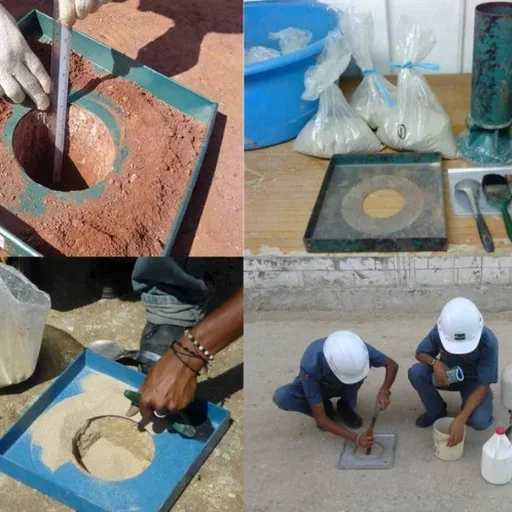
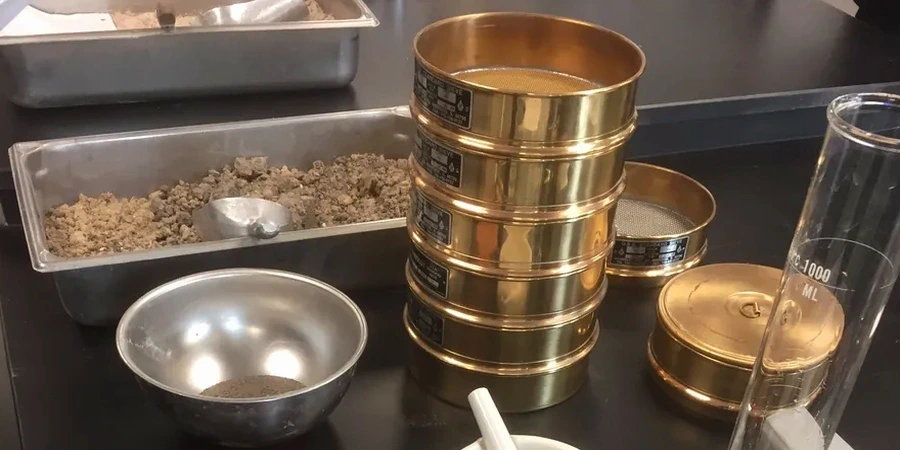
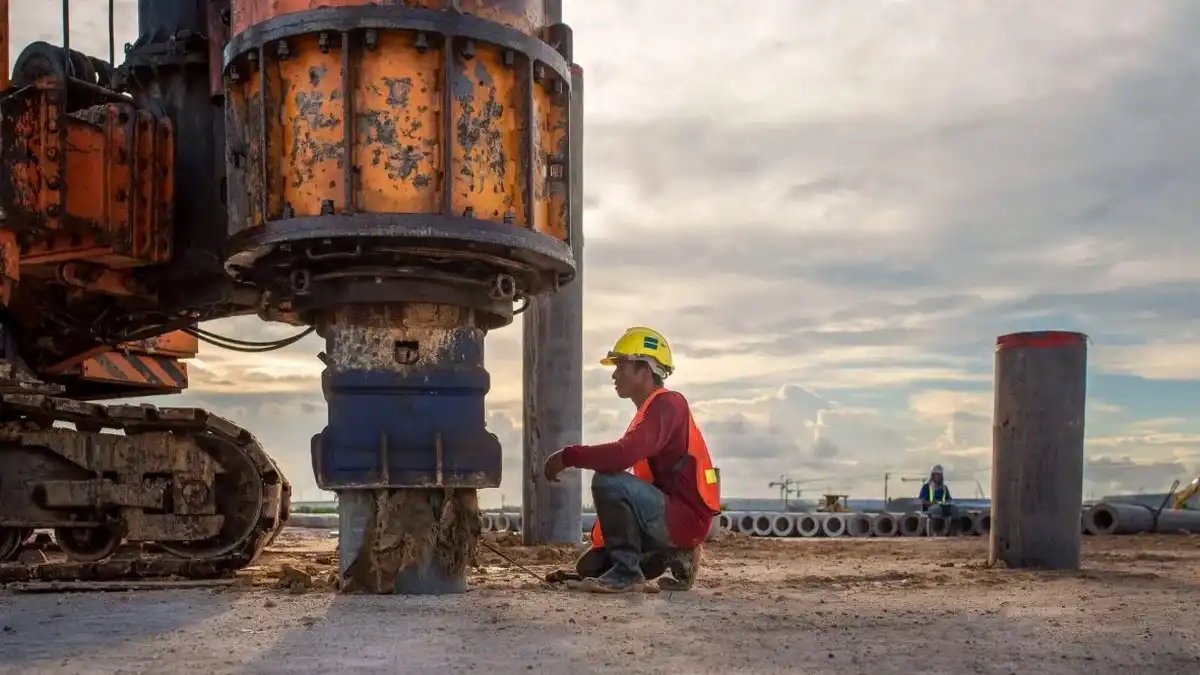
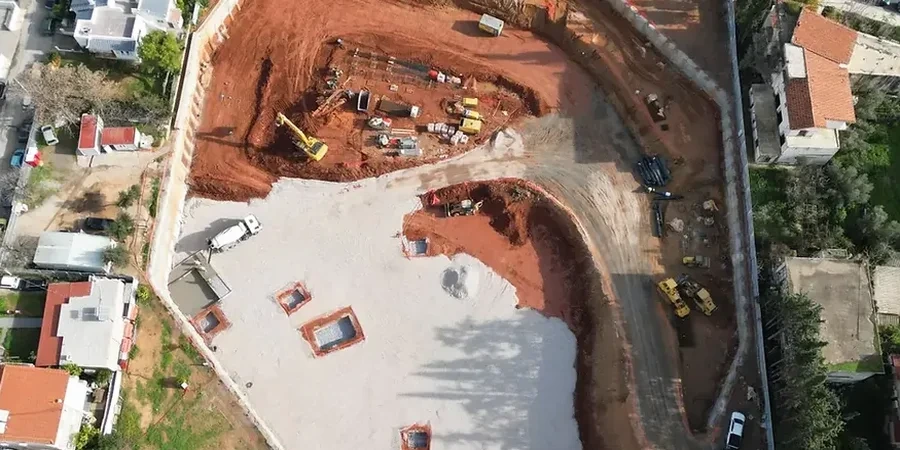
Portlaoise sits on a complex blanket of glacial till overlying Carboniferous limestone, a legacy of the Midlandian glaciation that compacted silts and clays into stiff lodgement material. Hit that till with an excavator and you quickly realise it looks stable in the short term but relaxes when unsupported. The water table across the Triogue catchment sits high from October to March, saturating the upper weathered zone and halving its suction. That combination of stiff overconsolidated soil and seasonal groundwater drives every temporary works design we prepare here. A test pit programme through the top 3.5 metres gives us the first real picture of boulder frequency and oxidation depth, while in-situ permeability readings in the underlying gravel lenses let us size dewatering arrays before the first sheet pile is driven.
A 6-metre cut in Portlaoise till without dewatering control loses effective stress so fast that basal heave can begin within 48 hours of exposure.