GEOTECHNICAL ENGINEERING
PORTLAOISE
HomeLaboratoryTriaxial test

Triaxial Testing in Portlaoise: Shear Strength Parameters for Irish Glacial Soils

Practical geotechnics, field-tested.

LEARN MORE

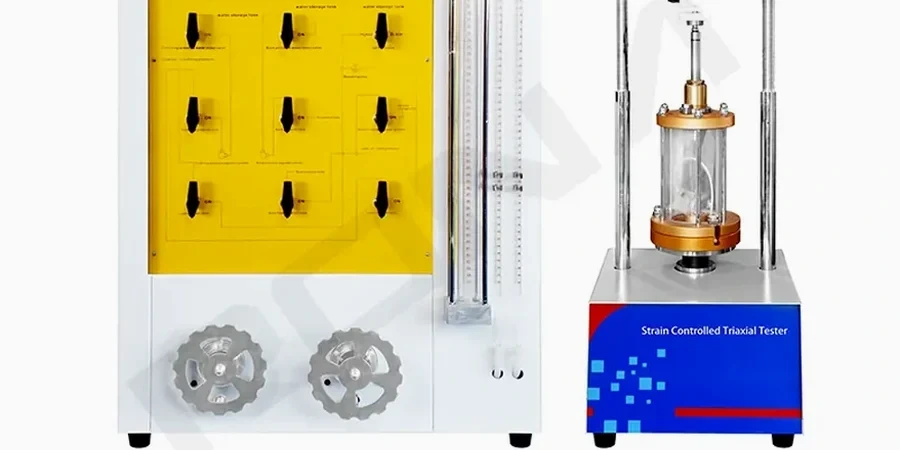
Specifying a foundation depth in Portlaoise without knowing the soil's friction angle is a gamble that backfires during excavation. The town sits on a complex blanket of Irish glacial till, with pockets of soft alluvium along the Triogue River floodplain. A standard borehole log gives you a description, but it does not give you the effective stress parameters needed to prevent a basal heave failure or a bearing capacity issue. We run the triaxial test to quantify cohesion and friction angle under controlled drainage conditions. For embankments on the M7 or deep excavations near the town centre, combining this data with in-situ permeability testing ensures your dewatering plan matches the real ground conditions, not just an assumption from a desk study.

Effective stress parameters from a triaxial test are not just numbers for a PLAXIS model; they are your insurance against a shear failure in Portlaoise's overconsolidated tills.
Our service areas

How we work

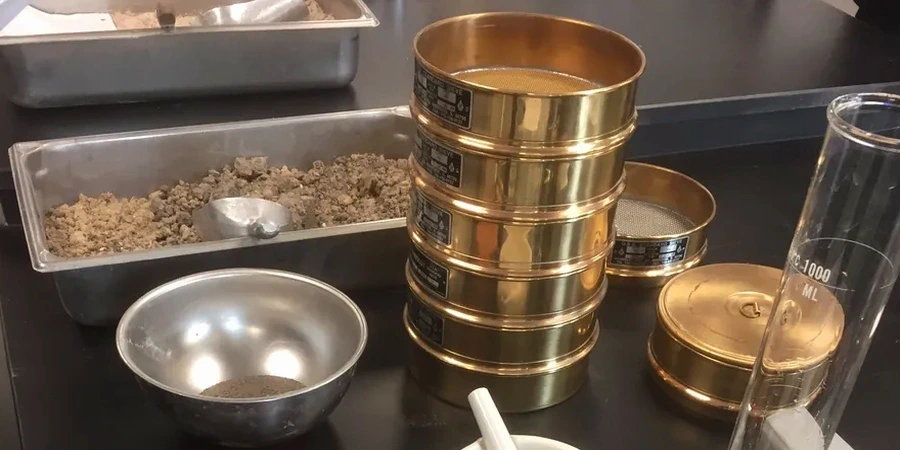
The transition from the waterlogged lowlands of the River Barrow basin to the drier limestone gravel ridges north of Portlaoise creates a stark contrast in soil behaviour. A sample from a sandy gravel ridge will drain almost instantly, while a silty clay from a pocket near the Heath might need weeks to consolidate. The triaxial test replicates these field conditions in the lab, applying cell pressure to simulate depth while we measure pore water response. In a consolidated-undrained test with pore pressure measurement, we obtain the critical state friction angle, essential for modelling undrained failure during rapid loading. For projects dealing with stiff lodgement till, we often recommend pairing this data with a grain-size analysis to correlate the fines content with the measured shear strength, a relationship critical for cut slopes in the Midland region.
Triaxial Testing in Portlaoise: Shear Strength Parameters for Irish Glacial Soils
Technical reference — Portlaoise

Local ground factors

The difference between building near the Portlaoise Retail Park and developing a site in the older residential area west of the railway line can be night and day. One sits on relatively competent gravels; the other often encounters soft, compressible silts. Ignoring a proper triaxial test in the softer zones leads to underestimating settlement or, worse, misjudging the factor of safety against a rotational slip. We have seen cases where an assumed undrained shear strength of 50 kPa, based on a standard penetration test correlation, turned out to be an optimistic 32 kPa when the actual consolidated-undrained triaxial test results came through. That gap is the difference between a stable excavation and a collapsed access ramp. The overconsolidated nature of the Irish till means peak strength is high, but post-peak softening is real; you must design for the critical state strength if large deformations are tolerable.

Need a geotechnical assessment?

Reply within 24h.

Email: contact@geotechnical-engineering.co

Regulatory framework

BS 1377-8:1990 - Methods of test for soils for civil engineering purposes. Shear strength tests (effective stress), ISRM Suggested Methods - Rock characterisation testing and monitoring, I.S. EN 1997-2:2007 - Eurocode 7: Geotechnical design. Ground investigation and testing, NSAI I.S. EN ISO 17892-8:2018 - Geotechnical investigation and testing. Laboratory testing of soil

Technical data

ParameterTypical value
Standard ComplianceBS 1377-8:1990 and ISRM Suggested Methods
Test Types AvailableUU, CIU with pore pressure, CID
Specimen Diameter38 mm, 50 mm, 70 mm, 100 mm
Maximum Particle SizeUp to 20 mm (1/6 of specimen diameter)
Saturation MethodBack pressure saturation with B-value check
Confining Pressure Range50 kPa to 1200 kPa, multi-stage options
Measured Parametersc', φ', Eu, stress path, pore pressure response

Common questions

What is the typical cost of a consolidated-undrained triaxial test in Portlaoise?

A standard set of three CIU tests with pore pressure measurement to derive effective stress parameters typically costs between €1,910 and €2,340, depending on the required confining pressures and sample preparation time.

How long does it take to get triaxial test results from a Portlaoise site?

The saturation and consolidation stages are time-dependent. For a low-permeability glacial clay till from the Portlaoise area, a single CIU test can take 7 to 10 days. A full set of three specimens usually requires 3 to 4 weeks from sample receipt to the final report.

Do you need a specific sample type for the triaxial test?

Yes. We require undisturbed Class 1 or Class 2 samples taken with thin-walled Shelby tubes or piston samplers. The sample diameter should be at least 100 mm to allow for trimming of a 70 mm or 100 mm triaxial specimen, avoiding disturbance from the tube edges.

Location and service area

We serve projects in Portlaoise and surrounding areas.

View larger map