GEOTECHNICAL ENGINEERING
PORTLAOISE
HomeRoadwayRigid pavement design

Rigid Pavement Design in Portlaoise: Concrete Roads That Last

Practical geotechnics, field-tested.

LEARN MORE

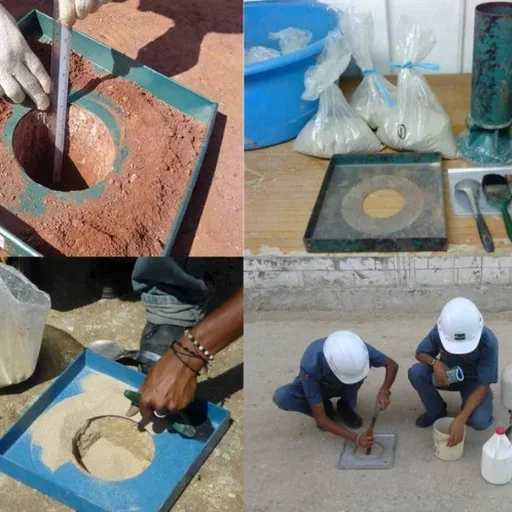
The soil under a warehouse in Togher behaves differently than the ground beneath a loading bay on the Timahoe Road. We see this in Portlaoise every month. One side of town sits on glacial till with decent bearing. The other side has pockets of soft alluvium that deflect under repeated axle loads. When you need a concrete pavement that won't crack or settle, those differences define the design. Our team runs plate load tests right at formation level to measure the modulus of subgrade reaction before a single meter of concrete is poured. That data shapes the slab thickness, the reinforcement, and the joint spacing. No guesswork. Just a direct link between what the ground can carry and what the pavement demands.

A well-designed rigid pavement in Portlaoise should reach a 40-year design life with only joint sealant maintenance. Get the subgrade wrong and you'll lose it in five.

Our service areas

How we work

Portlaoise sits at roughly 100 meters above sea level, with rainfall averaging over 800 mm per year. That moisture works its way into the subgrade. A rigid pavement here lives or dies by its drainage and its load transfer at the joints. We design dowelled contraction joints to handle the 40-tonne trucks that move through the town's distribution centers daily. The concrete mix itself is specified for freeze-thaw resistance and sulfate exposure, common in the local ground. For projects where the subgrade is marginal, we integrate the CBR road design methodology to verify the capping layer before the pavement goes down. Edge thickening at loading docks, isolation joints at column lines, and steel fiber reinforcement in high-bay racking aisles are all standard details we adapt to each site.
Rigid Pavement Design in Portlaoise: Concrete Roads That Last
Technical reference — Portlaoise

Local ground factors

Portlaoise grew fast when the M7 motorway opened. Warehouses and logistics parks spread across former agricultural land. That land was never engineered for heavy point loads. We have investigated sites where the near-surface soils are a mix of made ground and weathered limestone, highly variable over short distances. Without a proper subgrade assessment, you risk differential settlement at construction joints, pumping of fines at slab edges, and fatigue cracking from repetitive forklift traffic. The repair cost for a failed warehouse slab often exceeds the cost of the original pavement. We design to the limit state philosophy in the Irish National Annex to Eurocode 2, ensuring the concrete section and the foundation layers work as one system.

Need a geotechnical assessment?

Reply within 24h.

Email: contact@geotechnical-engineering.co

Regulatory framework

DMURS (Design Manual for Urban Roads and Streets), I.S. EN 1992-1-1 (Eurocode 2) with Irish National Annex, NRA HD 26/06 (Pavement Design for National Roads, historical reference), TRL Road Note 29 (Structural Design of Concrete Roads), BRITPAVE Concrete Pavement Design Guide

Technical data

ParameterTypical value
Design traffic (msa)20-80 (industrial/logistics)
Concrete flexural strength4.5 - 5.5 N/mm² (28-day)
Modulus of subgrade reaction (k)Verified on-site via plate load test
Joint spacing (unreinforced)25-30 x slab thickness
Load transfer efficiency (LTE)>75% at dowelled joints
Base courseCement-bound or lean concrete (min 150 mm)
Reinforcement typeSteel fibers or A252 mesh (as designed)

Common questions

What is the typical design life of a rigid pavement for a Portlaoise distribution center?

We design industrial rigid pavements for a 40-year service life under the specified traffic loading. The design is verified against fatigue damage from repetitive axle loads using the flexural stress ratio approach. Joint sealant replacement every 7 to 10 years is the primary maintenance required.

How much does rigid pavement design and testing cost for a typical site?

For a standalone design package with on-site plate load testing and full joint layout drawings, the cost ranges from €1.800 to €5.240 depending on the area and the number of loading zones. The fee covers the subgrade investigation, the structural design of the concrete slab, and the construction specification.

When is a rigid pavement chosen over a flexible one in Portlaoise?

Rigid pavement is chosen when the subgrade is weak or variable, when there are concentrated point loads from racking legs, or when the client wants minimal maintenance and no rutting over the asset life. The higher initial cost is offset by lower whole-life costs for high-traffic industrial facilities.

Location and service area

We serve projects in Portlaoise and surrounding areas.

View larger map