GEOTECHNICAL ENGINEERING
PORTLAOISE
HomeSlopes & WallsSlope stability analysis

Slope Stability Analysis in Portlaoise: Geotechnical Safety for Irish Ground Conditions

Practical geotechnics, field-tested.

LEARN MORE

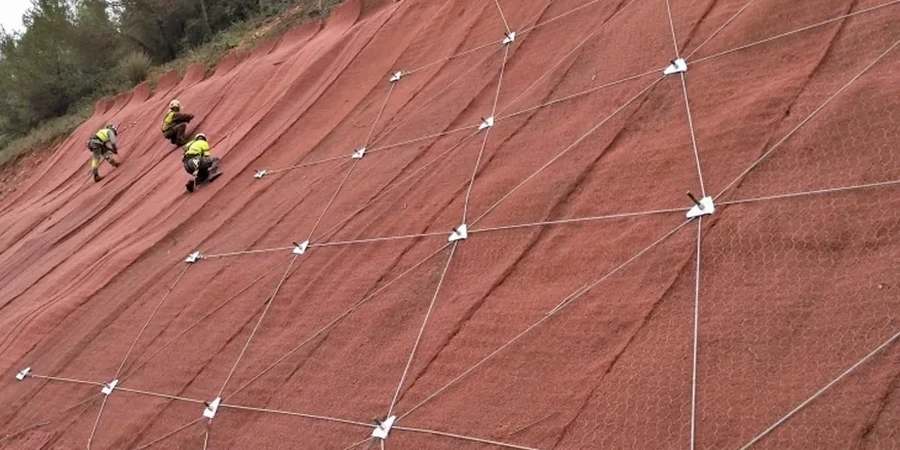
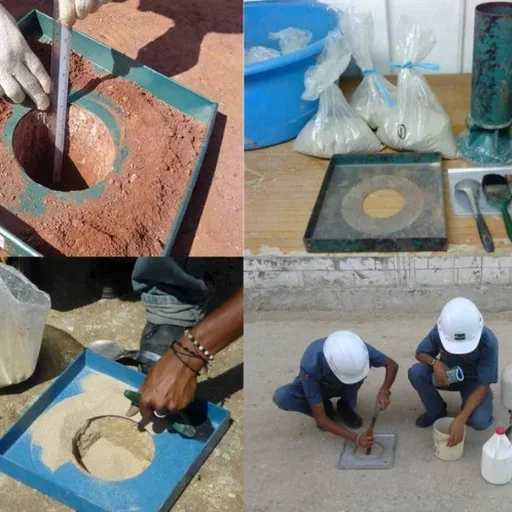
On the boulder clay slopes near Portlaoise, we see the same pattern every winter. Groundwater rises. Pore pressure builds. And slopes that looked fine in August start creeping by December. Portlaoise sits on glacial till overlying limestone bedrock—a contact zone that creates perched water tables on hillsides around the town. With 6,000 residents and growing, new housing estates keep pushing onto marginal ground. A slope failure here isn't just an engineering problem. It's a planning disaster that can stall a project for months. Our team runs limit equilibrium analysis using Spencer and Morgenstern-Price methods, calibrated with real shear strength data from local boreholes. Before breaking ground on any cut deeper than 2 metres, we recommend pairing the analysis with test pits to verify the till-bedrock interface depth across the site.

A factor of safety of 1.0 means the slope is theoretically stable—until the next rainstorm changes the pore pressure regime.

Our service areas

How we work

Portlaoise gets 800 mm of rainfall annually, concentrated between October and March. That's the critical window for slope stability. The upper till layer drains reasonably well in summer. But the lower lodgement till—dense, overconsolidated, with silt lenses—acts as an aquitard. Water sits on top. Pore pressures spike. Factor of safety drops. Our modelling accounts for transient seepage conditions using SEEP/W coupled with SLOPE/W, running both short-term undrained and long-term drained scenarios. For sites near the Triogue River floodplain, where alluvial silts overlie the till, we integrate CPT testing to map soft zones without disturbing the stratigraphy. Every analysis follows Eurocode 7 Design Approach 1, checking both Combination 1 and Combination 2 partial factors. The output isn't just a number. It's a clear go/no-go recommendation with remediation options if needed.
Slope Stability Analysis in Portlaoise: Geotechnical Safety for Irish Ground Conditions
Technical reference — Portlaoise

Local ground factors

The Ridge Road area and the slopes west of the M7 tell two different Portlaoise stories. Ridge Road sits on thinner till over weathered limestone—generally stable, with cut slopes holding well at 1:2 gradients. But move toward the Dublin Road retail park zone, where made ground and reworked till blanket the natural profile. Those slopes fail differently. Shallow translational slides. A few metres wide. Triggered after three days of sustained rain. The risk isn't theoretical. We've documented tension cracks on a 4-metre cut behind a commercial unit there, traced back to missing drainage provisions during construction. A proper analysis would have flagged the need for a toe drain and regrading to 1:3. In Portlaoise, the cost of remediation after failure runs three to five times higher than the cost of analysis before earthworks begin.

Need a geotechnical assessment?

Reply within 24h.

Email: contact@geotechnical-engineering.co

Explanatory video

Regulatory framework

IS EN 1997-1:2004 Eurocode 7 – Geotechnical design (with Irish National Annex), IS EN 1997-2:2007 – Ground investigation and testing, IS EN 1998-5:2004 – Foundations, retaining structures, and geotechnical aspects (seismic), NSAI guidance on seismic coefficients for Ireland, CIBSE / UKPC guidance on slope drainage design (referenced in Irish practice)

Technical data

ParameterTypical value
Analysis methodLimit equilibrium (Spencer, Morgenstern-Price)
Design standardEurocode 7 (IS EN 1997-1:2004 + Irish National Annex)
Minimum FoS for permanent slopes1.30 (Combination 1), 1.00 (Combination 2)
Seismic coefficient (ah)0.02–0.05 per NSAI guidance
Groundwater modellingSteady-state and transient seepage (SEEP/W)
Typical Portlaoise soil unit weight21–23 kN/m³ (glacial till)
Shear strength inputc' and φ' from triaxial CIU/CID tests

Common questions

What's the typical cost for a slope stability analysis on a single-family housing site in Portlaoise?

For a single plot with one cut slope or embankment, expect between €1,260 and €2,500. The range depends on whether we need new site investigation data or can work from existing borehole logs. A more complex site with multiple slope faces and transient groundwater modelling typically falls between €2,800 and €4,040.

How long does the analysis take from site visit to final report?

Standard turnaround is 10 to 15 working days after site investigation data is available. If we're running the investigation concurrently, add 5 to 7 days for drilling and lab testing of shear strength samples. We can expedite to 7 working days for urgent planning submission deadlines.

What factor of safety does Laois County Council require for planning approval?

Laois County Council follows Eurocode 7 requirements. Permanent slopes need a minimum factor of safety of 1.30 for Combination 1 (persistent design situation) and 1.00 for Combination 2 (seismic or accidental). Temporary works slopes during construction can go down to 1.20. We present both combinations in the design report so the planning file is complete.

Do you handle slopes affecting existing neighbouring properties?

Yes. Party wall and boundary slope assessments are a regular part of our Portlaoise work. We model the existing ground profile, document current conditions with photos and inclinometer readings where relevant, and assess the impact of proposed excavation on adjacent foundations or retaining structures. The report includes a construction methodology section that contractors can follow to minimise risk during earthworks.

Location and service area

We serve projects in Portlaoise and surrounding areas.

View larger map