GEOTECHNICAL ENGINEERING
PORTLAOISE
HomeInvestigationSPT (Standard Penetration Test)

SPT Testing in Portlaoise: Reliable Ground Data Before You Break Ground

Practical geotechnics, field-tested.

LEARN MORE

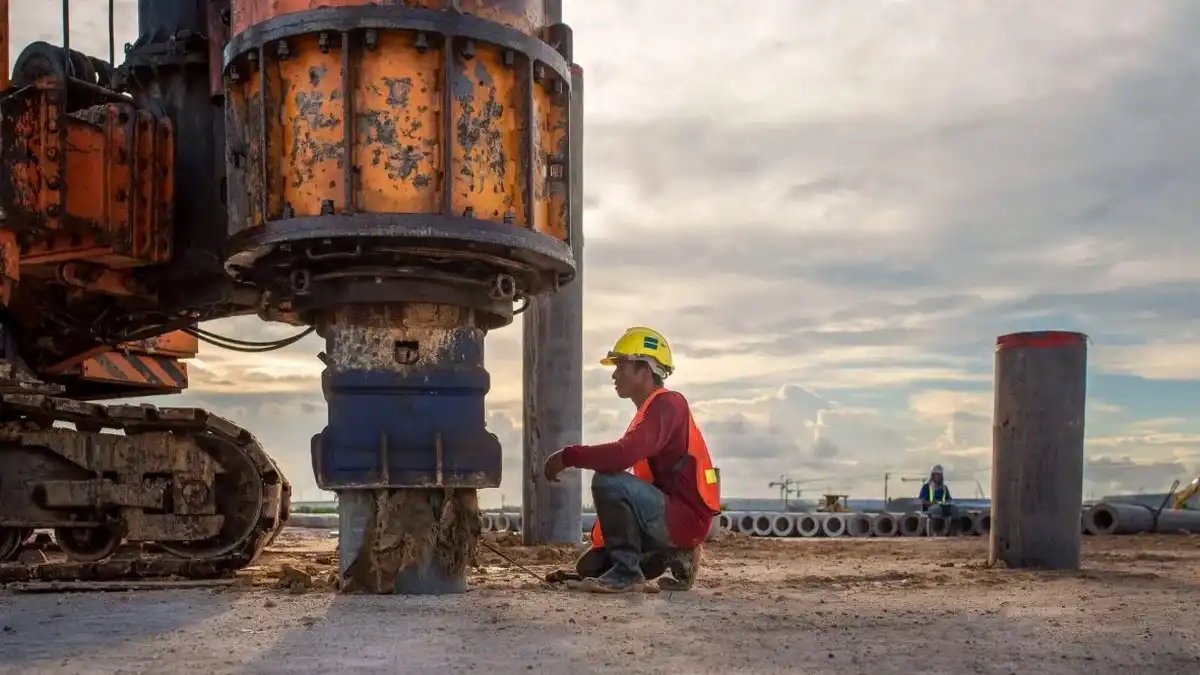
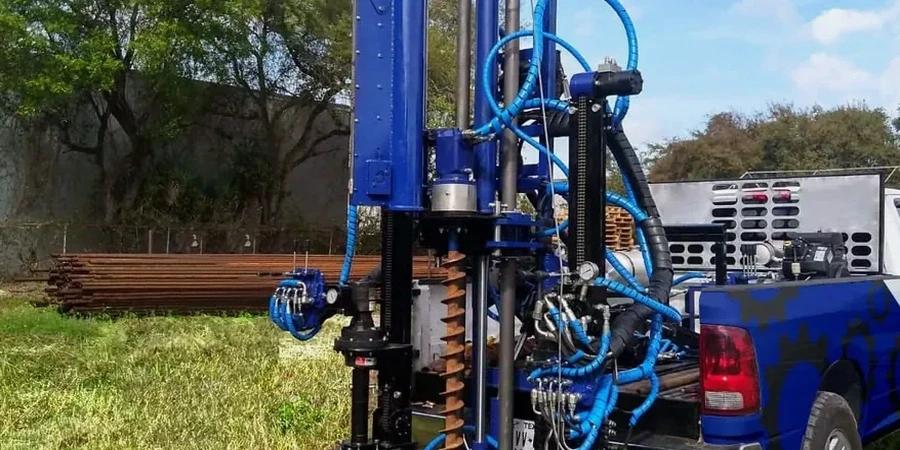
The rig arrives on a low-loader, a track-mounted drill with a mast that folds down for transport through Portlaoise's narrow approach roads. Once it's leveled on site, usually on a brownfield plot near the Triogue or a greenfield extension beyond the M7, the automatic hammer starts its rhythm: 63.5 kg dropping 760 mm, driving the split-spoon sampler into the ground in 150 mm increments. We record every blow. The N-value isn't just a number on a log sheet; it tells us whether we're in the dense glacial till left by the Midlandian glaciation or hitting the weathered limestone bedrock that underlies much of Portlaoise. Without this profile, you're guessing about bearing capacity.

An N-value from a calibrated automatic hammer in Portlaoise's glacial till gives you a number you can take straight into a bearing capacity equation and trust.
Our service areas

How we work

A common mistake we see around Portlaoise is assuming that ground conditions are uniform because the site looks flat and dry. Contractors will dig a trial pit at one corner and think they understand the whole plot. Then the excavator hits a lens of soft alluvial silt near the old course of the Triogue River, or a pocket of loose sand in the till, and suddenly the foundation design doesn't work. An SPT program with properly spaced boreholes catches these variations. The test procedure follows I.S. EN ISO 22476-3:2005, using a calibrated automatic trip hammer that removes operator-dependent energy losses. We log every run: recovery, moisture, consistency, and the N-value corrected for overburden pressure. For sites where the upper strata are borderline, combining the SPT data with a CPT test can give a continuous profile that fills in the gaps between hammer blows.
SPT Testing in Portlaoise: Reliable Ground Data Before You Break Ground
Technical reference — Portlaoise

Local ground factors

On the outskirts of Portlaoise, particularly near the development land south of the Togher roundabout, we often encounter a thin cap of sandy gravel over a stiff boulder clay that looks competent but masks soft lenses at depth. If the SPT stops at 3 metres and misses a 2-metre band of soft silt at 5 metres, the differential settlement across the pad could crack blockwork before the roof is on. For piled foundations, refusal on a boulder at 2 metres can be misread as bedrock if the driller isn't watching the cuttings and the blow count pattern. The SPT log, interpreted by someone who knows the local Quaternary geology, distinguishes a boulder from the top of the Waulsortian limestone. That distinction changes the pile length and the cost of the substructure.

Need a geotechnical assessment?

Reply within 24h.

Email: contact@geotechnical-engineering.co

Explanatory video

Regulatory framework

I.S. EN ISO 22476-3:2005, Eurocode 7 (I.S. EN 1997-1:2004) with Irish National Annex, I.S. EN 1997-2:2007 (Ground investigation and testing), Institution of Structural Engineers Ireland (IStructE) guidance notes

Technical data

ParameterTypical value
Hammer typeAutomatic trip hammer, 63.5 kg
Drop height760 mm
SamplerStandard split spoon (50 mm OD)
Recording intervalsBlows per 150 mm (3 increments per 450 mm run)
N-valueSum of blows over 300 mm (last two increments)
Energy calibrationHammer energy ratio monitored per I.S. EN ISO 22476-3
Applicable strataSands, gravels, silts, stiff clays, weathered rock

Common questions

What does an SPT test cost for a standard site in Portlaoise?

For a typical single-family house site in Portlaoise requiring two boreholes to 6 metres depth, SPT testing plus a factual report falls in the €450 to €740 range. Deeper holes, difficult access, or additional lab testing push it higher. We price per linear metre of drilling plus a per-test charge, so you pay for what the ground actually needs.

How deep do you need to drill for a house foundation in Portlaoise?

It depends on the geology. In the glacial till that covers much of Portlaoise, we typically drill to 6–10 metres below ground level, aiming to penetrate any soft layers and confirm competent bearing stratum. If bedrock is shallow, we core at least 3 metres into sound limestone to rule out voids or weathered zones. The depth is always confirmed after the first borehole reveals the ground profile.

Do I need an SPT if the site already has trial pits?

Trial pits show you the top 3–4 metres. An SPT goes deeper and gives you a quantitative blow count, not just a visual description. For any structure with a design life beyond a garden shed, Laois County Council's building control will expect borehole data with SPT N-values. The two methods are complementary, not interchangeable.

Location and service area

We serve projects in Portlaoise and surrounding areas. More info.

View larger map