GEOTECHNICAL ENGINEERING
PORTLAOISE
HomeFoundationsPile foundation design

Pile Foundation Design for Midland Soils

Practical geotechnics, field-tested.

LEARN MORE

Portlaoise sits at roughly 100 metres elevation on a complex mix of limestone-derived glacial till and pockets of soft alluvium along the River Triogue. Recent housing and industrial expansion around Junction 17 has pushed development onto these variable soils, where a standard strip footing simply will not cut it. We see this every month: competent ground one borehole, loose saturated silts the next. For structural engineers dealing with three-storey apartment blocks or warehouse slabs bearing heavy racking, a pile foundation design becomes the only rational path to transfer load below the weathered zone. Our lab works to I.S. EN 1997-1:2005, producing pile designs backed by in-situ permeability data and real core recovery numbers from the Mullingar formation. No guesswork. No over-engineering without a reason. Just a clean load path from column to bedrock or dense lodgement till, verified with static load tests where the brief demands it.

In Portlaoise glacial till, pile capacity can double within a single metre of penetration — knowing exactly where to set the toe is what separates a working foundation from a costly claim.

Our service areas

How we work

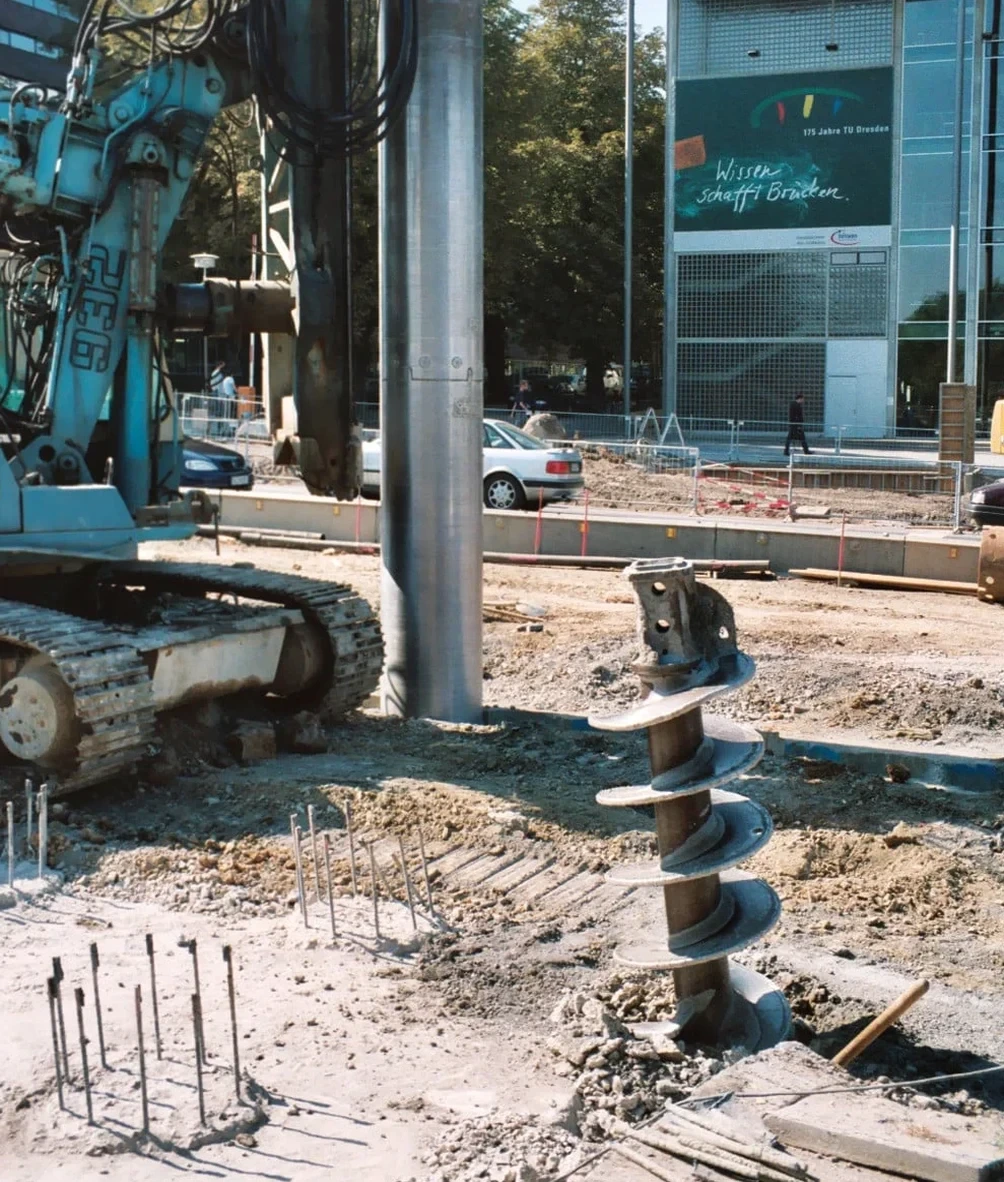
The glacial stratigraphy under Portlaoise is notoriously unpredictable. You might hit dense stony till at 4 metres in one corner of the Togher site and push through 9 metres of soft silty clay 30 metres away. This forces a pile foundation design approach that accounts for downdrag, negative skin friction, and potential swelling of the weathered limestone. We rely heavily on CPT testing to map the interface between the soft alluvium and the competent till before selecting pile type and toe level. For the Abbeyleix Road area, where made ground overlies organic silts, continuous flight auger piles often prove more practical than driven precast units. Our design reports detail the undrained shear strength profile, pile group efficiency factors, and settlement predictions under the serviceability limit state. Each calculation references the Irish National Annex to Eurocode 7. The result is a pile layout that the piling contractor can price accurately and the site team can execute without constant redesign.
Pile Foundation Design for Midland Soils
Technical reference — Portlaoise

Local ground factors

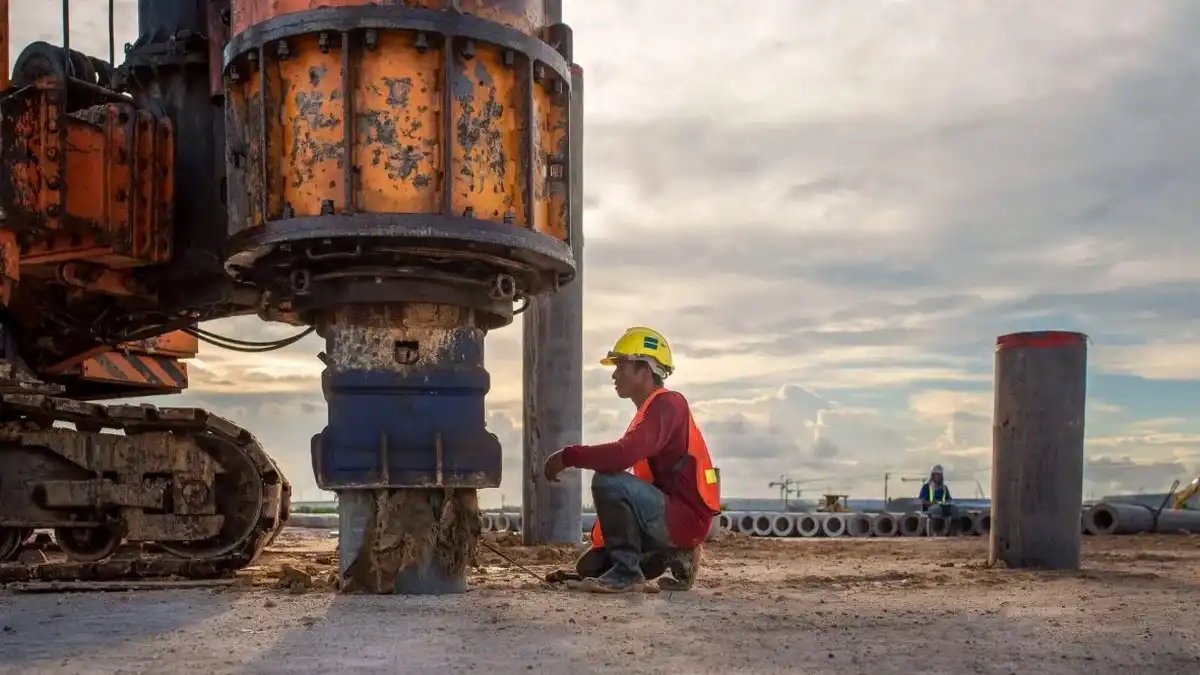
The pile rig arrives on a wet Tuesday morning. The operator starts the auger and the first three metres come up as soft grey silt — exactly what the CPT trace predicted. But by metre five the torque spikes and the crowd pressure drops: the auger has hit a limestone pinnacle masked by the till. This scenario plays out regularly in Portlaoise, where the bedrock surface is deeply weathered and irregular. A pile foundation design without a pre-construction borehole at each pile location risks refusal on pinnacles while adjacent piles socket deep into solution features. We mitigate this by specifying pilot drilling through the weathered cap or switching to a pile type that can be terminated on the pinnacle itself, provided the bearing capacity and rock integrity checks pass. The alternative is a pile that refuses shallow, leaves the rig standing idle, and triggers a variation order that nobody budgeted for.

Need a geotechnical assessment?

Reply within 24h.

Email: contact@geotechnical-engineering.co

Regulatory framework

I.S. EN 1997-1:2005 Geotechnical design – General rules, I.S. EN 1997-2:2007 Ground investigation and testing, Institution of Structural Engineers – Manual for the geotechnical design of structures to Eurocode 7, I.S. EN 12699:2015 Execution of special geotechnical work – Displacement piles

Technical data

ParameterTypical value
Design standardI.S. EN 1997-1:2005 + Irish National Annex
Typical pile typesCFA, driven precast, bored cast-in-situ
Bearing stratumDense lodgement till or limestone bedrock
Load test methodStatic maintained load to 1.5 × SWL
Shaft resistance derivationCPT-based (Bustamante & Gianeselli) or SPT-based
Settlement criteria≤ 25 mm total, ≤ 10 mm differential
Typical pile depth range6 m to 22 m below ground level

Common questions

What pile type works best in Portlaoise glacial till?

Continuous flight auger piles generally perform well in the variable till and alluvium found around Portlaoise. They install quickly, generate minimal spoil, and can be terminated on or within the dense lodgement till. Where the till is very stony or cobble-rich, driven precast piles may be more reliable. We make the call only after reviewing CPT logs or borehole cores from the exact site.

What does a pile foundation design cost in Portlaoise?

Design fees for a pile foundation in Portlaoise typically range from €1,670 for a straightforward single-pile or small group to €5,200 for a full scheme with multiple pile types, group effects, negative skin friction analysis, and load test specification. The final figure depends on the number of piles, the complexity of the ground profile, and whether we are providing installation monitoring.

Do you handle the site investigation as well as the design?

Yes. We can mobilise a CPT rig or cable percussion boring crew to your Portlaoise site, log the strata, run laboratory tests on recovered samples, and feed all the data directly into the pile design. Keeping investigation and design under one roof eliminates the information gaps that cause delays during piling.

How do you account for the high water table near the River Triogue?

A high water table affects both pile installation and long-term performance. We specify casing or temporary support fluids for bored piles where groundwater is within the excavation depth. For driven piles, we account for pore pressure build-up during driving and the subsequent equalisation. The design also checks for buoyancy effects on basement slabs and uplift on tension piles where required.

What settlement can I expect with a piled foundation?

For piles socketed into dense till or bedrock under Portlaoise, total settlement is usually well under 25 mm and differential settlement under 10 mm. We calculate settlement using the equivalent raft method or t-z curves derived from CPT data, and we benchmark the predictions against static load test results wherever possible.

Location and service area

We serve projects in Portlaoise and surrounding areas.

View larger map