GEOTECHNICAL ENGINEERING
PORTLAOISE
HomeSeismicSoil liquefaction analysis

Soil Liquefaction Analysis in Portlaoise: Understanding Ground Behavior Under Seismic Load

Practical geotechnics, field-tested.

LEARN MORE

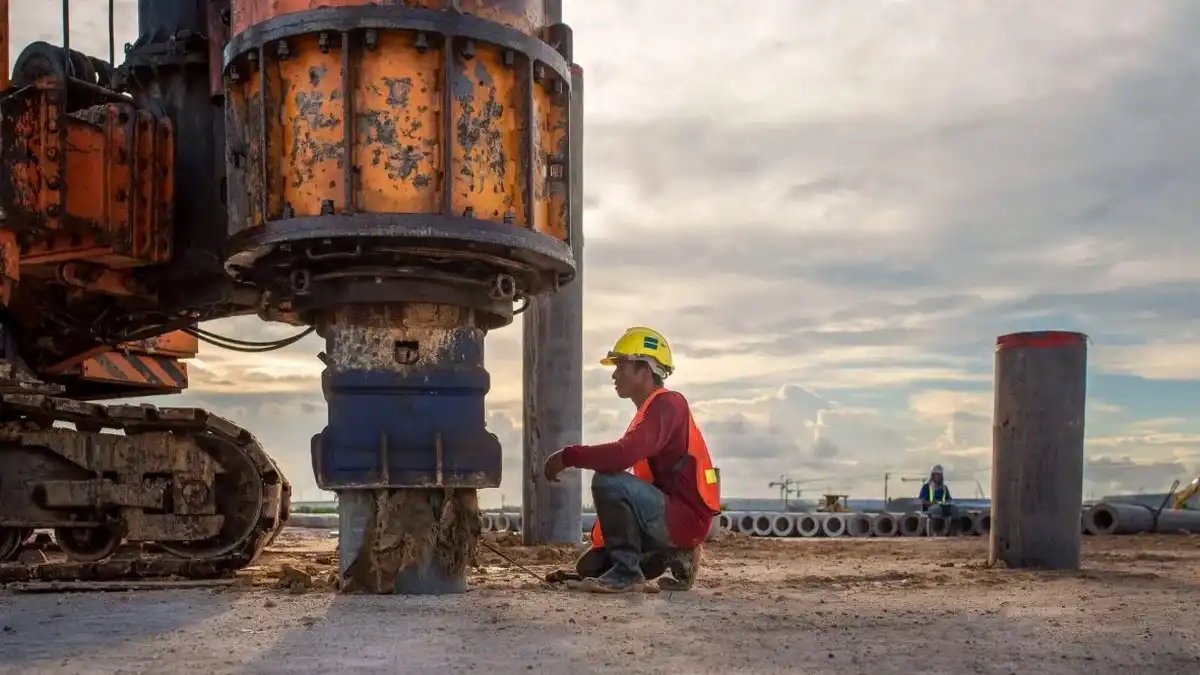
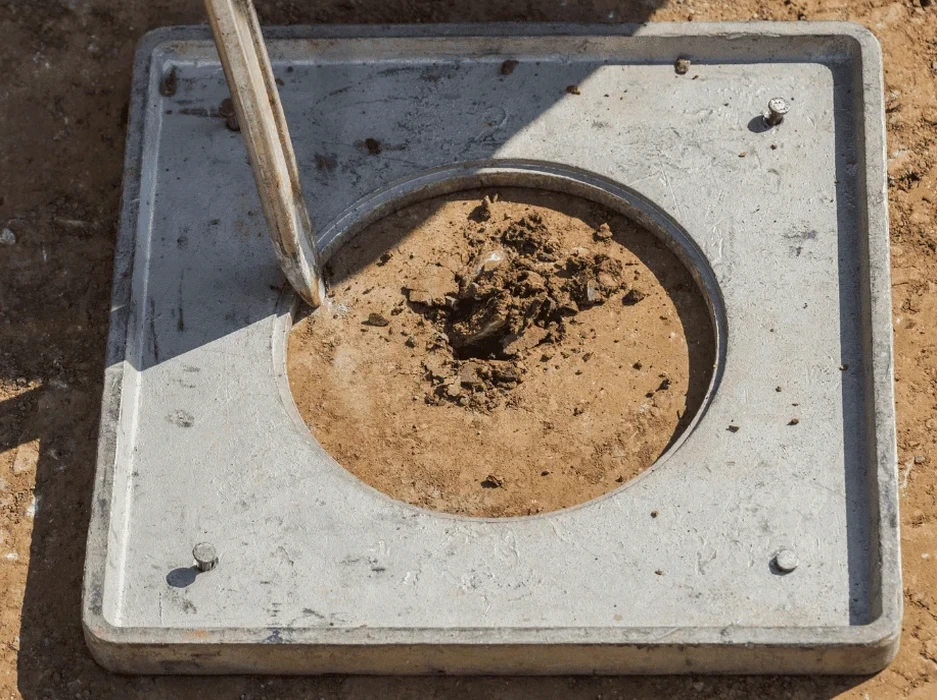
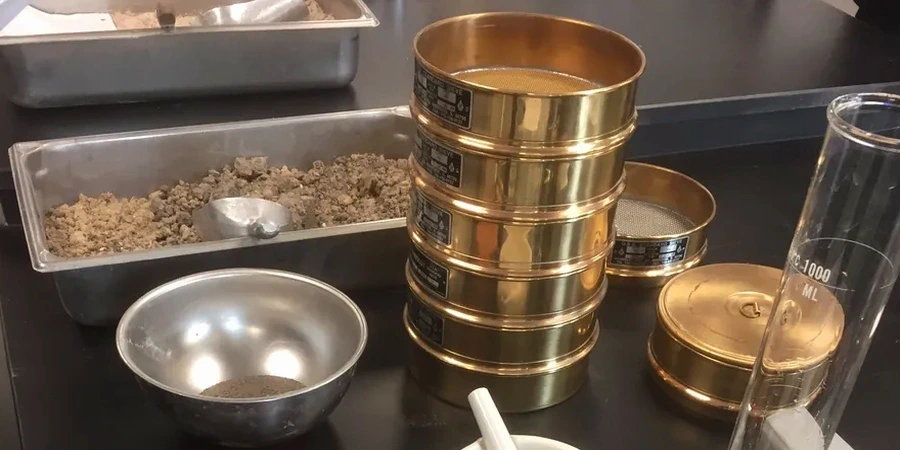
When the CPT rig arrives on a site outside Portlaoise, the first thing our team does is calibrate the piezocone against the local water table, which in this part of the Irish midlands can sit surprisingly high within the glacial till. We run a dissipation test right at the depth where the silt transitions into fine sand, because that contact zone is exactly where excess pore pressure builds during a seismic event. It is methodical work, watching the pore pressure decay curve flatten on the screen, and it tells us more about the drainage capacity of the ground than a dozen borehole logs. In the lab, we couple that field data with cyclic triaxial tests on reconstituted specimens, applying the loading frequencies that match the seismicity recorded by the Irish National Seismic Network for the Laois region. The setup itself is unglamorous—a triaxial cell, some latex membranes, a back-pressure system—but the output defines whether a foundation in central Portlaoise needs ground improvement or can proceed as designed. For sandy layers beneath the Triogue River floodplain, we often cross-check our CPT data with a grain size analysis to confirm the fines content, which is the single most influential factor in liquefaction susceptibility.

In the layered glacial deposits around Portlaoise, a clean sand lens at four metres depth can liquefy while the overlying till remains intact—spotting that contrast is what the analysis is built for.
Our service areas

How we work

Portlaoise has expanded well beyond its historic core around the old fort, pushing residential and logistics development into the drumlin fields north of the M7 and the lowlands south toward the Triogue. That growth matters in geotechnical terms because the town sits on a patchwork of glacial deposits: lodgement tills, glaciofluvial sands, and lacustrine silts that were laid down when the midland ice sheet retreated. What we see repeatedly in site investigations across the Togher and Mountmellick Road areas is a layered stratigraphy where a crust of stiff till overlies loose-to-medium-dense sand, often at depths between three and seven metres. This is the classic profile for liquefaction concerns under the I.S. EN 1998-5:2005 framework. The soil liquefaction analysis we perform follows the simplified procedure, calculating the cyclic stress ratio from the site-specific peak ground acceleration and comparing it against the cyclic resistance ratio derived from normalised CPT tip resistance. Where the factor of safety dips below 1.25, we recommend either densification or a reconsideration of the foundation type. For sites with marginal results, a seismic refraction survey can map the shear wave velocity profile across the whole footprint, giving us a continuous Vs30 value rather than relying solely on point data from the cone.
Soil Liquefaction Analysis in Portlaoise: Understanding Ground Behavior Under Seismic Load
Technical reference — Portlaoise

Local ground factors

The glacial sands in the Portlaoise basin are not the uniform, well-documented deposits you find in Christchurch or Kobe—they are erratic, lens-shaped, and often contain a silt fraction that complicates the liquefaction assessment. A sand with 15% fines behaves differently under cyclic loading than a clean sand with 2% fines, and the CPT-based triggering curves from Boulanger and Idriss (2014) account for that, but only if the fines content is correctly calibrated to local conditions. The bigger concern in this town is the water table fluctuation. Portlaoise sits at roughly 100 metres above sea level on relatively flat terrain, and after a wet winter the groundwater can rise to within a metre of the surface in low-lying areas near the Triogue. That saturated condition is exactly what primes a granular layer for liquefaction, even under the moderate seismicity that Ireland experiences. The Irish Annex to Eurocode 8 assigns a reference peak ground acceleration that many developers dismiss as low, but in our experience, a PGA of 0.02g to 0.04g can still trigger excess pore pressure in loose, saturated silts if the duration of shaking is long enough. The real risk is not catastrophic bearing failure but differential settlement that cracks slab-on-grade floors and misaligns buried services in commercial buildings along the Abbeyleix Road corridor.

Need a geotechnical assessment?

Reply within 24h.

Email: contact@geotechnical-engineering.co

Regulatory framework

I.S. EN 1998-1:2005 + National Annex (Eurocode 8: Design of structures for earthquake resistance), I.S. EN 1998-5:2005 (Foundations, retaining structures and geotechnical aspects), I.S. EN 1997-2:2007 (Eurocode 7: Ground investigation and testing), EN ISO 22476-1:2012 (CPT and CPTU field testing), EN ISO 17892-5:2017 (Laboratory oedometer testing for post-liquefaction settlement)

Technical data

ParameterTypical value
Applicable standardI.S. EN 1998-5:2005 (Eurocode 8, Part 5)
Analysis methodSimplified procedure (Seed & Idriss) with CPT-based CRR
Key input parameterPeak ground acceleration (PGA) from Irish Annex
Field test referenceCPT with pore pressure measurement (CPTu)
Laboratory validationCyclic triaxial test (ASTM D5311/D5311M or I.S. equivalent)
Critical depth range3 to 15 m below ground level
Factor of safety threshold1.25 for low-risk structures per I.S. EN 1998-5
Post-liquefaction outputSettlement and lateral spreading displacement estimates

Common questions

Does Portlaoise actually need liquefaction analysis given Ireland's low seismicity?

Ireland is not aseismic. The Irish National Seismic Network records events every year, and while large magnitudes are rare, the Eurocode 8 Irish Annex assigns a non-zero design ground acceleration for County Laois. In saturated granular soils, even moderate shaking of long duration can generate excess pore pressure. If the ground investigation reveals loose sands or silts below the water table, the code requires a liquefaction check. Skipping it can mean accepting a settlement risk that insurers and lenders increasingly ask about.

What is the typical cost of a soil liquefaction analysis for a site in Portlaoise?

A site-specific liquefaction assessment in the Portlaoise area generally ranges from €2,020 to €3,610, depending on whether we are working from existing CPT data or need to mobilise the cone rig, and on the number of cyclic triaxial tests required to calibrate the triggering curves to local soil conditions.

How long does the analysis take from field testing to final report?

A typical programme runs over three to four weeks. The CPT fieldwork is completed in a day, but the laboratory cyclic triaxial tests require specimen consolidation and staged loading that takes up to two weeks. The interpretive report, with factor-of-safety profiles and settlement estimates, follows within a week of receiving the lab data.

Location and service area

We serve projects in Portlaoise and surrounding areas.

View larger map